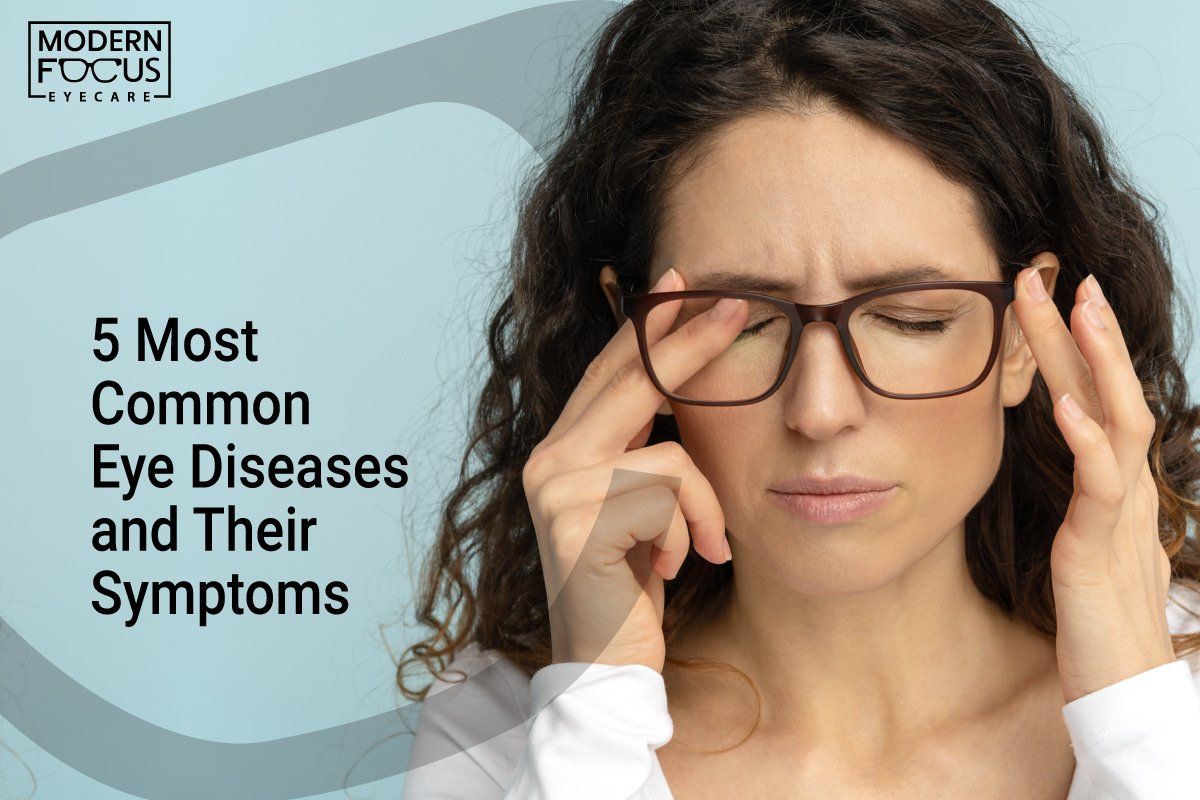
5 Most Common Eye Diseases and Their Symptoms
Most people ignore signs of common vision problems in hopes that their vision will clear up over time. Unfortunately, that isn't likely to happen. The World Health Organization (WHO) also reports that at least 2.2 billion people worldwide have near or distant vision impairment.
Hence, early detection and treatment of eye problems contribute to preserving or even improving vision. This article will tackle the five most common eye diseases and their symptoms.
1. Age-Related Macular Degeneration (AMD)
Age-related macular degeneration (AMD) in adults over 50 is the most common cause of severe vision loss. The macula is the central part of the retina that allows you to see clearly. As we age, it can deteriorate, causing us to have a hazy vision. Reading a book, watching movies, or recognizing people's faces may also be challenging.
This type of eye problem may be difficult to reverse once it has occurred. An early diagnosis can therefore reduce its severity.
Symptoms of Age-Related Macular Degeneration (AMD)
Usually, people don't experience any symptoms of this eye disease in its early stages. It also depends on the stage. The three stages are as follows:
- Early Stage AMD. It doesn't cause any symptoms.
- Intermediate Stage AMD. Some people may experience mild symptoms, including blurry vision in the central area of the vision or difficulty seeing in low light.
- Late Stage AMD (wet or dry type) causes straight lines to appear bent or wavy. The center of your vision may also appear blurry. Eventually, this blurry area may become larger, or color perception may worsen.
Symptoms of AMD usually get worse over time. As soon as you notice these symptoms, see your eye doctor immediately.
2. Cataracts
Cataracts can affect either one or both eyes. They appear as cloudy areas in the lens of your eyes. Cataracts are a common eye problem that affects more than half of all American adults over age 65. The good thing is that surgery can treat cataracts. It is safe and provides vision correction.
Symptoms of Cataracts
If your cataracts are mild, they may not show any symptoms immediately. However, as they evolve, cataracts can affect your vision. Some of the cataract symptoms include:
- Cloudy or blurry vision
- Fading colors
- Sensitivity to bright sunlight, lamps, or headlights
- Seeing halos around lights
- Sensitivity to light and glare
- Difficulty seeing at night
Some of these symptoms may indicate other eye problems, as well. You should seek medical attention if you experience any of these issues.
3. Glaucoma
Glaucoma is a common eye disease that affects people over age 40. It typically occurs due to elevated eye pressure that damages the optic nerve. This damage prevents the eye from adequately transmitting visual information to the brain. Glaucoma has some common types – open-angle, normal-tension, or angle-closure. Their symptoms may also vary.
Symptoms of Glaucoma
The early stages of glaucoma can be symptom-free. Regardless of the type of glaucoma you have, you may experience these symptoms:
- Headaches.
- Rainbow-colored halos around lights.
- Low vision, blurred vision, narrowed vision (tunnel vision), or blind spots.
- Loss of side vision
- Eye pain, pressure, or redness
Also, glaucoma is the leading cause of blindness in adults over age 50. As we age, we should consider getting a yearly eye examination. Early diagnosis is key to preserving vision.
4. Diabetic Retinopathy
According to the National Eye Institute, diabetic retinopathy can cause vision loss and blindness in diabetic patients. It damages the blood vessels that supply the retina, which causes the retina to be adversely affected. Eventually, this can lead to permanent blindness.
Symptoms of Diabetic Retinopathy
Most people may not be aware that they have diabetic retinopathy. There are often no signs and symptoms in the beginning. Diabetic retinopathy will cause symptoms such as:
- Sudden vision loss
- Floating shapes in your field of vision (floaters)
- Blurred or patchy vision
- Eye pain or redness
- Colors appear faded
- Blank or dark spots in your field of vision
- Not seeing well at night, and
Although these symptoms may not indicate diabetic retinopathy, you should consider getting an eye exam.
5. Refractive Error
A refractive error is the most common vision problem. It can hinder your ability to focus well due to the shape of your eyes. There could be several causes of this, including the size of the eyeball (whether larger or smaller), cornea's shape, or lens aging.
It has four common types:
- Presbyopia - inability to focus on close objects as you age
- Astigmatism - the inability of your eyes to focus well
- Myopia, or nearsightedness - sharp vision up close but blurry from a distance
- Hyperopia, or farsightedness - a clear field of vision from a distance but blurry at close range
Symptoms of Refractive Errors
Having a blurry vision is the most common symptom. Additional symptoms may include:
- Squinting
- Headaches
- Two-way vision
- Noticing a glare or halo around bright lights
- Eye strain (a feeling of fatigue or pain in your eyes)
- Difficulty focusing while reading or working on your computer
If you still have these symptoms, you might need a new glasses or contact lenses prescription. Therefore, get eye exams regularly so your eye doctor can ensure you see clearly.
Wrap Up
Our eyes play an important role in making us see clearly. To keep them healthy, you must give them extra attention and care.
Schedule Your Eye Checkup With Us!
Our board-certified eye doctors at
Modern Focus Eyecare diagnose, treat, and manage conditions affecting the eyes in addition to routine eye exams. Furthermore, we have optical specialists who are experts in getting your ideal prescription lenses to match your eyewear.
Feel free to
contact us if you or someone you know suffers from any eye diseases.